8 Beginner Sewing Patterns To Build Your Confidence (Even If You’re Brand New)
Discover beginner sewing patterns that will actually build your confidence. Learn what to look for, what to avoid, and which patterns are easiest when you’re just starting out.
This page contains affiliate links, which earn me a little bit of commission if you make a purchase, at no additional cost to you. Thank you for supporting my little corner of the internet!
Starting to sew is daunting.
There’s the sewing machine itself, with all its mysterious dials and noises. The pile of fabric you’re scared to cut into. The patterns covered in lines, symbols, and words that assume you already know what you’re doing.
Overwhelming, to say the least!
You’ve probably thought: “maybe I’m just not cut out for this”. It might look like everyone else manages to get it first time, and there you are struggling through the first seam.

But I’m here to tell you – the key isn’t talent, or expensive equipment, or even endless patience.
It’s choosing the right beginner sewing patterns – ones that teach you as you go, without overwhelming you or asking too much too soon.
To help you skip the patterns that will have you in a flap, I’ve put together a curated list of patterns that are totally doable for beginner sewists. Pick any one of these as your first project and I promise you’ll be off to a flying start.
Here’s my collection of beginner-friendly sewing patterns to send you off on your sewing journey.
Why You Shouldn’t Start with Free Patterns
When you’re starting out a new hobby, there’s always a temptation to spend as little as possible – I get it!
But there’s one thing that you should absolutely spend money on, and that’s a high quality sewing pattern.
While there are free sewing patterns out there that you could muscle your way through, a well-written and designed sewing pattern will save you headaches. The best beginner sewing patterns will even teach you how to sew with super clear step-by-step instructions and tips for beginner sewists.
That being said, if you really do want a free starting project, I’d suggest using my simple sewing tutorial for making cushions. I first learnt to sew aged 14 with little cushions and I still think they’re a wonderful beginner project.
Starting with a pattern that you’ll manage, enjoy and actually finish is key to gaining confidence in your sewing skills, so take your time to choose!

Related: How to Make a Ruffled Pillow Cover (Delightful DIY Cottagecore Tutorial!)
How to Pick the Perfect Beginner Sewing Pattern
There’s nothing more demoralising than starting a sewing project and getting completely stuck when you hit a niche technique that you can’t make head or tail of.
To save you having one of these confidence-crushing moments, here are some things to look out for in sewing patterns:
1. Start with accessories
Whilst you may want to dive right in and start making your own clothes, it’s a good idea to start with sewing accessories or homeware. They tend to have more straight lines, fewer fiddly moments, and are usually quicker than clothing.
2. Check the difficulty rating
Sewing pattern designers will almost always give a skill level to their patterns to help you when you’re buying. If you’re starting out, stick with beginner patterns!
3. Check the fabric recommendations
Patterns that are made with knit fabric (ie anything that stretches), lightweight or super bulky fabrics could all be complicated for a beginner.

4. Check the techniques required
Most pattern companies will list the techniques that are required for the project so you can decide whether it’s something you’d like to try. If you see the name of something you don’t recognise, pop it into YouTube to check if it’s something you think you could manage.
In particular, look at what closures the pattern requires. Zips and buttons can be tricky if you’re just starting out, so look for patterns that pull on.
5. Look at how many pieces there are
This is an easy one to overlook, but it makes a big difference.
Beginner-friendly patterns usually have a small number of pattern pieces that repeat or mirror each other. When a project involves lots of tiny shapes or pieces that all look slightly different, it’s much easier to get confused during cutting or assembly.
Fewer pieces generally means fewer chances to go wrong and a much calmer sewing experience.
6. Steer clear of vintage patterns
Vintage patterns can be absolutely beautiful and super exciting to sew, but they’re not for the faint-hearted! Even the longtime sewist will tend to find vintage patterns tricky since they were designed for an era where most people could sew and pattern companies assumed a base level of knowledge. Best to save these for when you’re feeling more confident!
Related: 18 Adorable Children’s Sewing Patterns: Made and Loved by a Sewing Mama
But Your First Pattern Doesn’t Have to Be Perfect!
Let’s pause for a moment and take the pressure off. You don’t need to choose the perfect first project, or have the perfect technique before you begin!
You just need something that feels manageable and appealing enough that you’ll actually enjoy sitting down to sew it. Finishing a simple project will teach you far more than abandoning an ambitious one halfway through.
The patterns below aren’t here because they’re the trendiest or most impressive. They’ve been chosen because they’re forgiving, clearly explained, and genuinely achievable for beginner sewists.
Each one teaches useful skills you’ll come back to again and again, without throwing in unnecessary complexity. These are the kinds of patterns that get finished, which is where your confidence will really start to grow.
With that in mind, let’s take a look at the patterns!

The Easiest Beginner Sewing Patterns
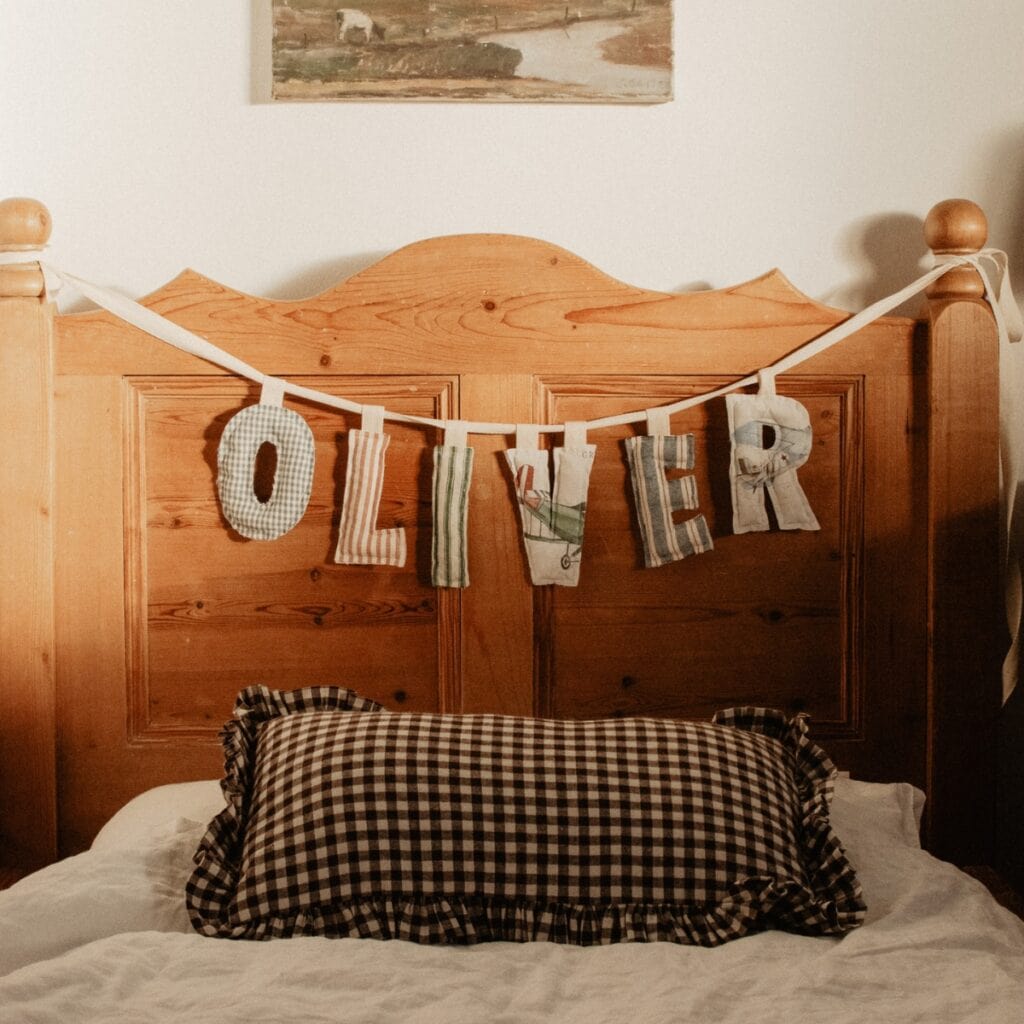
Alphabet Banner Sewing Pattern by Aboderie
Designed with beginners in mind, my Alphabet Banner sewing pattern gently walks you through every step of your first sewing project.
It’s a lovely, low-pressure make, with clear instructions, a follow-along video tutorial, and plenty of friendly tips along the way. It’s also quick enough to finish in an evening, which makes it a very satisfying place to begin.
Apron by Rooney Clothing
An apron is a great place to start your sewing journey because you don’t have to worry about fit, and you’ll mostly be sewing in a straight line! This pattern by Rooney Clothing is a lovely one to start with.

Margot Skirt by Me and Kiddo
Probably the easiest clothing item to make is a skirt, and this skirt from Me and Kiddo patterns is as easy as they come. You’ll learn new skills like how to insert pockets, add a waistband and hem your skirt, all with lovely instructions.

Ginger Tie Top by Small Museum
Proving that easy doesn’t have to mean boring, the Ginger Tie Top is an easy top sewing pattern that you’ll actually want to make. Absolutely no fiddly techniques, clearly explained instructions, and a super cute finished make.

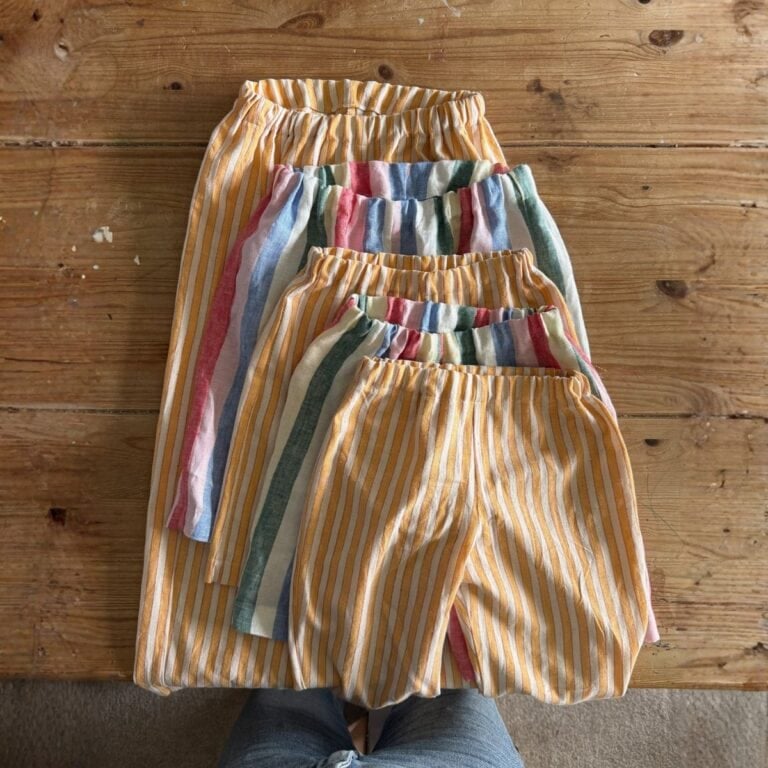
Sage Pants by Flora Child Co
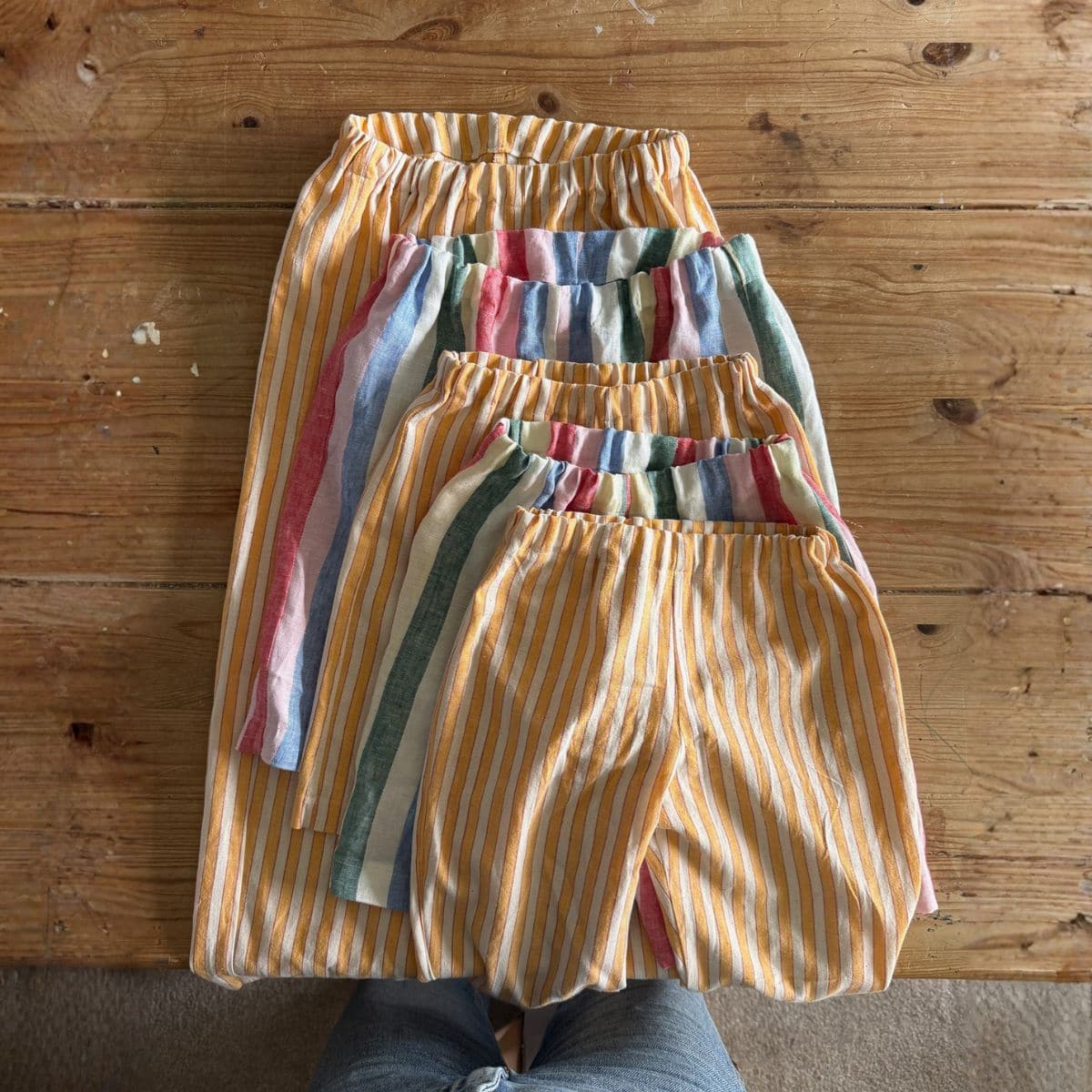
One of my all time favourite sewing patterns for a reason! This super simple kids trouser pattern can be whipped up in no time at all and has lovely clear instructions to help you make the perfect little pair of trousers first time.

Betty Wrap Dress by Rooney Clothing
If you’re looking for an easy dress pattern I’d always recommend trying a wrap dress since you don’t have to worry about zips and buttons. You’ll need to get the hang of using bias tape for this wrap dress pattern, but the clear instructions and video tutorial will help you on the way!

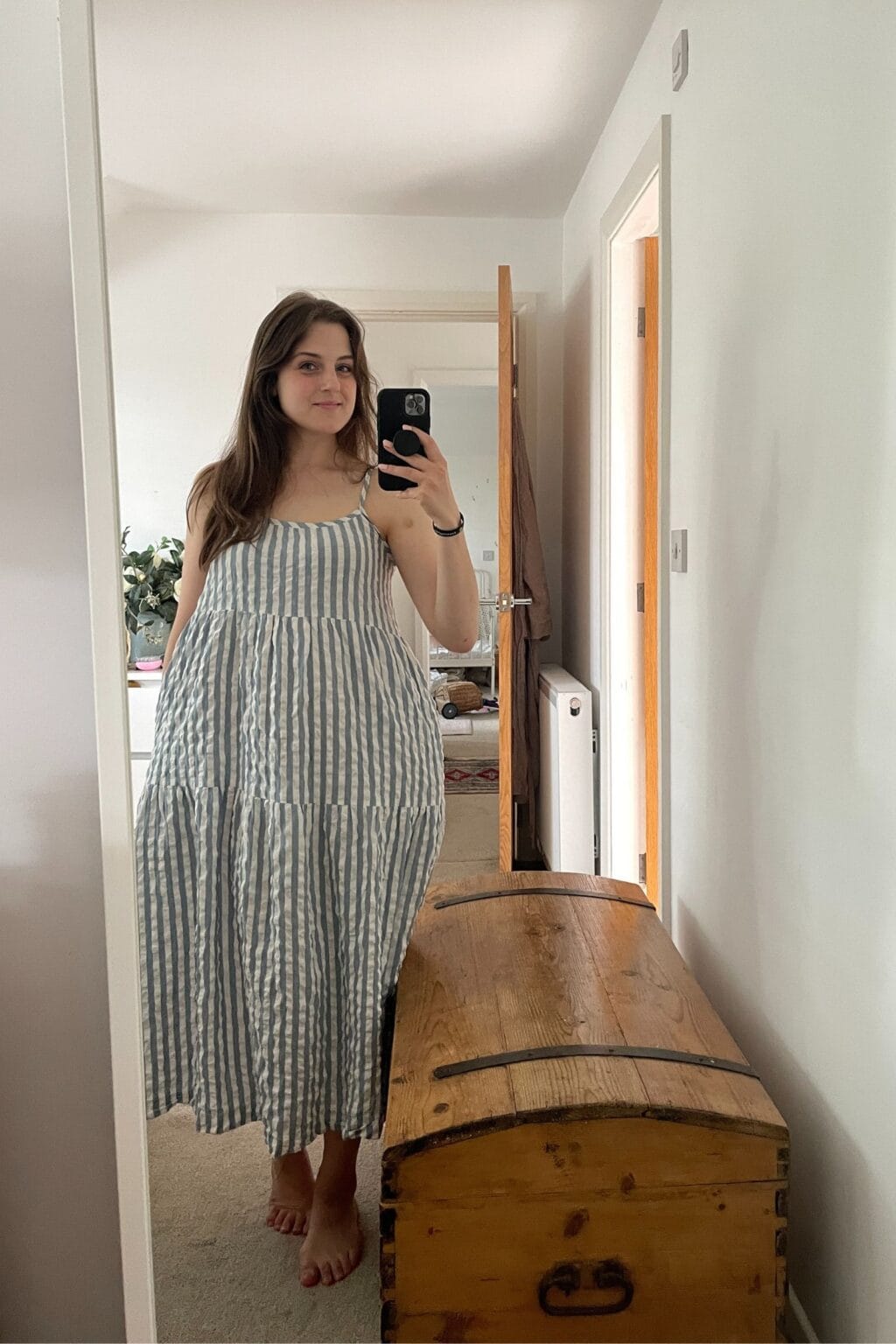
Skyline Dress by Syd Graham
This cute summer dress pattern would make a great first garment. No fiddly closures or techniques are required for this project, so it will set you up beautifully for sewing success.
Honeygirl Tee by Paradise Patterns
I know I said that starting with stretch fabrics can be hard – but this pattern proves me wrong!
If you’re looking for an easy sewing pattern that you’ll actually wear every day, this is a great choice. The pattern is super simple for beginners with exact stitch lengths and widths specified, and lots of tips for achieving a beautiful finish.

How You Really Learn to Sew
Learning to sew isn’t about getting everything right straight away.
It’s about building familiarity, making small mistakes, and slowly realising that you’re more capable than you thought!
Start with a project that excites you, take it one step at a time, and enjoy the process of creating something. Sewing confidence doesn’t arrive all at once, but each finished project will give you a little boost to keep going!
For more little beginner sewing projects without the overwhelm, you might like to look at:
How to Make a Ruffled Pillow Cover (Delightful DIY Cottagecore Tutorial!)
How to Sew a Cute Poncho (with Free Easy DIY Sewing Pattern)
17 Sundress Sewing Patterns You Need to Make Your Dream Summer Dress